Rebuilding Disjointed Information Channels to Support Stable Resource Deployment Across Concurrent Developments
Yves Hughes · Aug 2, 2026
Rebuilding Disjointed Information Channels to Support Stable Resource Deployment Across Concurrent Developments
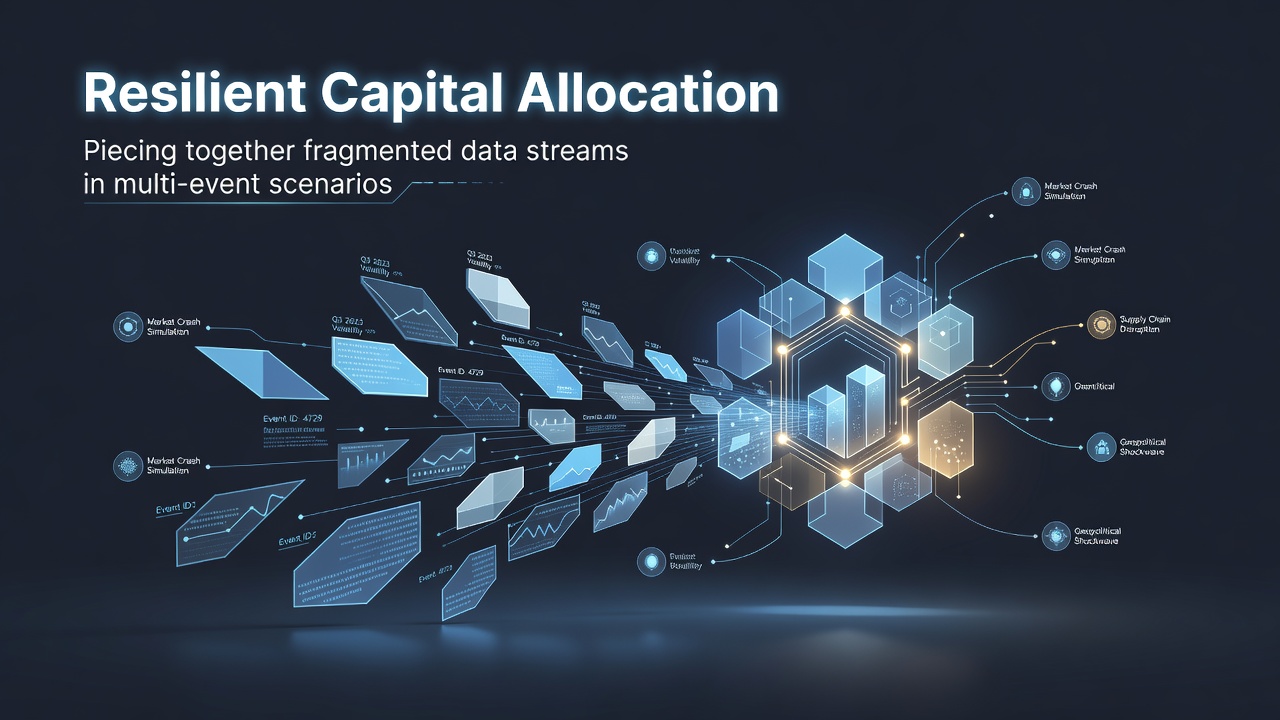
Financial institutions and corporate treasuries face increasing pressure to combine separate data inputs from market feeds, internal ledgers, and external reports when several developments unfold at once. Researchers at academic centers have documented how mismatched timestamps, varying formats, and incomplete records can delay decisions on where to direct funds during overlapping economic shifts, regulatory announcements, and geopolitical movements.
According to studies published by the National Bureau of Economic Research, organizations that apply systematic reconciliation protocols reduce allocation errors by measurable margins in simulated multi-event stress tests. These protocols involve mapping incoming streams onto common schemas, applying validation rules at ingestion points, and maintaining audit trails that allow rapid backtracking when discrepancies surface. Data shows that firms adopting such methods maintain steadier cash flow projections even when equity markets, commodity prices, and interest rate curves move simultaneously.
Core Techniques for Stream Alignment
Teams begin by standardizing identifiers across sources so that transaction records from one platform match reference data from another without manual intervention. Middleware layers then handle transformation steps that convert legacy file structures into real-time message formats, while machine learning classifiers flag outliers that fall outside expected ranges. Observers note that this layered approach allows continuous updates rather than periodic batch processing, which proves critical when events cascade within hours rather than days.
Case examples from European manufacturing groups illustrate the pattern. One firm integrated sensor data from production lines with treasury management systems, enabling automatic reallocation of working capital when supply disruptions coincided with currency fluctuations in August 2026. The same organization later extended the framework to include supplier credit scores and logistics delay indicators, creating a single dashboard that updates capital deployment recommendations every fifteen minutes.
Real-Time Validation and Error Handling
Validation engines compare new records against historical baselines and cross-check totals against independent benchmarks published by central banks. When inconsistencies appear, the system isolates the affected stream segment and routes it for human review while allowing unaffected allocations to proceed. Figures from industry reports indicate that this selective quarantine approach cuts downtime by more than half compared with full-system halts.
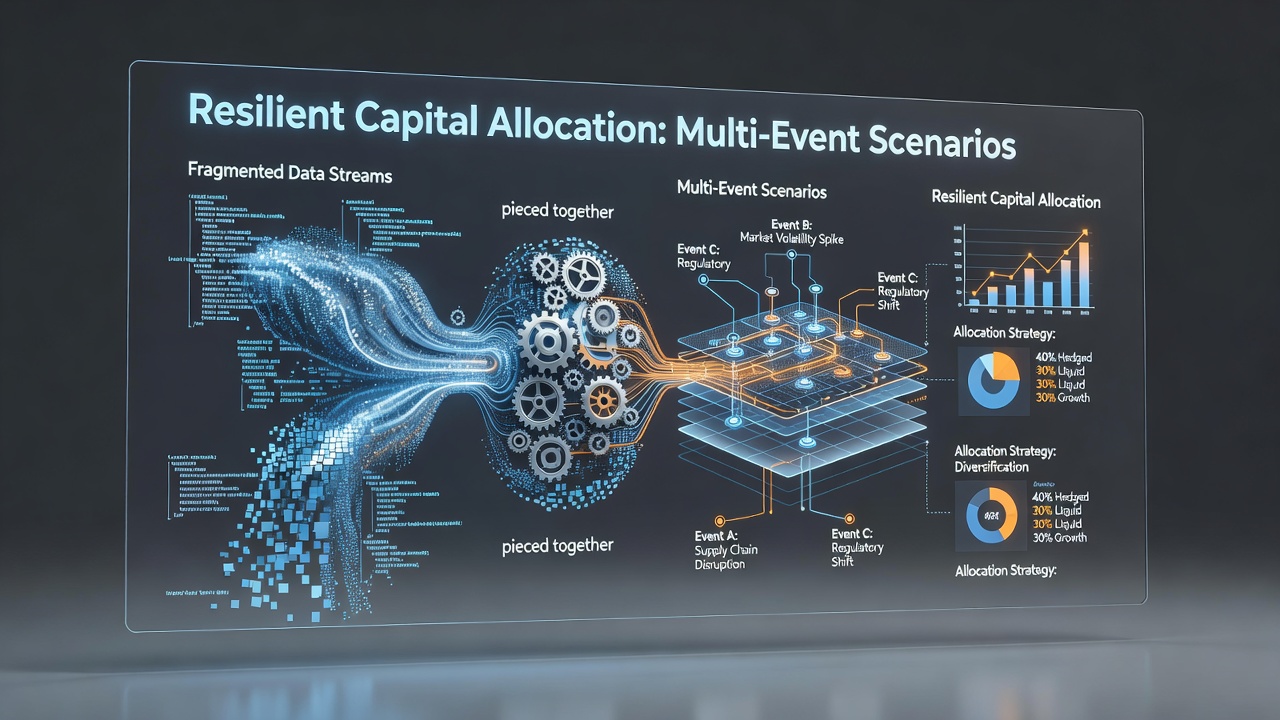
Canadian regulators have highlighted similar benefits in their guidelines on operational resilience, noting that entities maintaining redundant data paths experience fewer interruptions when multiple risk factors activate together. Australian Treasury analyses reinforce the point, showing that diversified information sources improve forecast accuracy during periods of concurrent policy changes and commodity shocks.
Application in Portfolio Construction
Asset managers apply these same principles when constructing portfolios exposed to several macro events. They pull pricing data from multiple exchanges, overlay economic indicator releases, and incorporate sentiment signals extracted from regulatory filings. The combined view supports dynamic rebalancing rules that shift exposure toward defensive sectors when early warning thresholds are breached in two or more indicators at once.
Academic papers from university finance departments describe how Monte Carlo frameworks fed by reconciled streams produce wider confidence intervals that better capture tail risks arising from joint occurrences. Those intervals then inform position sizing and hedging ratios, ensuring capital buffers remain proportional to the observed correlation structure rather than assumed independence.
Outlook for 2026 and Beyond
Upcoming updates to data reporting standards in several jurisdictions are expected to accelerate adoption of unified schemas. Entities that have already invested in stream integration report shorter implementation timelines for new compliance requirements. Industry associations project continued growth in demand for specialized middleware that supports both regulatory submissions and internal capital planning without duplicating infrastructure.
Conclusion
Organizations that treat fragmented data streams as a solvable engineering challenge rather than an unavoidable constraint demonstrate measurable improvements in allocation stability. By aligning identifiers, validating inputs continuously, and maintaining flexible processing layers, they preserve decision speed even when multiple events overlap. Evidence from regulatory reviews and research publications indicates these practices scale across sectors and geographies, providing a foundation for more reliable resource deployment under complex conditions.